Komposit-Beispiel
Diese Seite zeigt eine Komposit-Entität, Orders.details, die auf einem Stage in MongoDB und auf einem anderen in PostgreSQL gespeichert wird, und wie dieselbe Abfrage auf beiden dasselbe Ergebnis liefert.
Ein Punkt im Namen einer Entität definiert eine Komposit-Entität: Orders.details ist eine Komposit-Entität von Orders.
Ist die Quelle NoSQL, werden die Positionen innerhalb der Bestellung in einer einzigen Collection gespeichert; ist die Quelle relational, werden sie in separaten Tabellen gespeichert. In der Domäne werden sie unabhängig vom Typ der Quelle gleich behandelt, sodass das Modell nicht von der Persistenztechnologie abhängt.
Komposit-Entität
In diesem Beispiel ist Orders.details eine Komposit-Entität von Orders. Ihre Beziehung order mit target: details erzeugt die Komposit-Beziehung details in Orders.
Teil des Schemas, in dem die Komposit-Entität definiert ist:
domain:
  entities:
...
  - name: Orders
    primaryKey: [id]
    indexes:
    - name: orderDate
      fields: [orderDate]
    properties:
    - name: id
      type: integer
      required: true
      autoIncrement: true
    - name: customerId
      required: true
      length: 5
    - name: orderDate
      type: dateTime
  - name: Orders.details
    primaryKey: [orderId, productId]
    properties:
    - name: orderId
      required: true
      type: integer
    - name: productId
      required: true
      type: integer
    - name: unitPrice
      type: decimal
    - name: quantity
      type: decimal
    relations:
    - name: order
      from: orderId
      entity: Orders
      to: id
      target: details
...
Vollständiges Schema:
domain:
  entities:
  - name: Address
    abstract: true
    indexes:
    - name: postalCode
      fields: ["postalCode"]
    - name: region
      fields: ["region", "country"]
    - name: city
      fields: ["city"]
    properties:
    - name: address
    - name: city
    - name: region
    - name: postalCode
      length: 20
    - name: country
  - name: Categories
    primaryKey: ["id"]
    uniqueKey: ["name"]
    properties:
    - name: id
      type: integer
      required: true
      autoIncrement: true
    - name: name
      required: true
  - name: Customers
    extends: Address
    primaryKey: ["id"]
    indexes:
    - name: name
      fields: ["name"]
    properties:
    - name: id
      length: 5
      required: true
    - name: name
      required: true
  - name: Products
    primaryKey: ["id"]
    uniqueKey: ["name", "supplierId"]
    properties:
    - name: id
      type: integer
      required: true
      autoIncrement: true
    - name: name
      required: true
    - name: categoryId
      type: integer
    - name: quantity
    - name: price
      type: decimal
      default: 0
    relations:
    - name: category
      from: categoryId
      entity: Categories
      to: id
      target: products
  - name: Orders
    primaryKey: ["id"]
    indexes:
    - name: orderDate
      fields: ["orderDate"]
    properties:
    - name: id
      type: integer
      required: true
      autoIncrement: true
    - name: customerId
      required: true
      length: 5
    - name: orderDate
      type: dateTime
    relations:
    - name: customer
      from: customerId
      entity: Customers
      to: id
      target: orders
  - name: Orders.details
    primaryKey: ["orderId", "productId"]
    properties:
    - name: orderId
      required: true
      type: integer
    - name: productId
      required: true
      type: integer
    - name: unitPrice
      type: decimal
    - name: quantity
      type: decimal
    relations:
    - name: order
      from: orderId
      entity: Orders
      to: id
      target: details
    - name: product
      from: productId
      entity: Products
      to: id
      target: orderDetails
infrastructure:
  views:
  - name: default
  mappings:
  - name: default
    entities:
    - name: Address
      abstract: true
      properties:
      - name: address
        mapping: Address
      - name: city
        mapping: City
      - name: region
        mapping: Region
      - name: postalCode
        mapping: PostalCode
      - name: country
        mapping: Country
    - name: Categories
      mapping: Categories
      properties:
      - name: id
        mapping: CategoryID
      - name: name
        mapping: CategoryName
    - name: Customers
      extends: Address
      mapping: Customers
      properties:
      - name: id
        mapping: CustomerID
      - name: name
        mapping: CompanyName
    - name: Products
      mapping: Products
      properties:
      - name: id
        mapping: ProductID
      - name: name
        mapping: ProductName
      - name: categoryId
        mapping: CategoryID
      - name: quantity
        mapping: QuantityPerUnit
      - name: price
        mapping: UnitPrice
    - name: Orders
      mapping: Orders
      properties:
      - name: id
        mapping: OrderID
      - name: customerId
        mapping: CustomerID
      - name: orderDate
        mapping: OrderDate
    - name: Orders.details
      mapping: Order Details
      properties:
      - name: orderId
        mapping: OrderID
      - name: productId
        mapping: ProductID
      - name: unitPrice
        mapping: UnitPrice
      - name: quantity
        mapping: Quantity
  - name: mongoDb
    extends: default
    entities:
      - name: Orders
        sequence: SQ_ORDERS
        properties:
          - name: id
            mapping: _id
  sources:
  - name: Catalog
    dialect: MySQL
    mapping: default
    connection: ${CNN_MYSQL}
  - name: Crm
    dialect: PostgreSQL
    mapping: default
    connection: ${CNN_POSTGRES}
  - name: Ordering
    dialect: MongoDB
    mapping: mongoDb
    connection: ${CNN_MONGODB}
  stages:
  - name: default
    sources:
    - name: Catalog
      condition: entity.in(["Categories","Products"])
    - name: Crm
      condition: entity.in(["Address","Customers"])
    - name: Ordering
      condition: entity.in(["Orders","Orders.details"])
Umgebungsvariablen:
CNN_MYSQL={"host":"localhost","port":3306,"user":"test","password":"test","database":"test"}
CNN_POSTGRES={"host":"localhost","port":5433,"user":"test","password":"test","database":"test"}
CNN_MONGODB={"url":"mongodb://test:test@localhost:27017","database":"test"}
Lab:
Komposit-Entität in verschiedenen Quellen
Dieses Beispiel zeigt, wie eine Komposit-Entität in verschiedenen Quellen gespeichert wird.
Auf dem Stage default werden Orders und Orders.details in MongoDB gespeichert; auf dem Stage insights in PostgreSQL.
Teil des Schemas, in dem die Stages konfiguriert sind:
...
  stages:
  - name: default
    sources:
    - name: Catalog
      condition: entity.in(["Categories","Products"])
    - name: Crm
      condition: entity.in(["Address","Customers"])
    - name: Ordering
      condition: entity.in(["Orders","Orders.details"])
  - name: insights
    sources:
    - name: Insights
...
Vollständiges Schema:
domain:
  enums:
  entities:
  - name: Address
    abstract: true
    indexes:
    - name: postalCode
      fields: ["postalCode"]
    - name: region
      fields: ["region", "country"]
    - name: city
      fields: ["city"]
    properties:
    - name: address
    - name: city
    - name: region
    - name: postalCode
      length: 20
    - name: country
  - name: Categories
    primaryKey: ["id"]
    uniqueKey: ["name"]
    properties:
    - name: id
      type: integer
      required: true
      autoIncrement: true
    - name: name
      required: true
  - name: Customers
    extends: Address
    primaryKey: ["id"]
    indexes:
    - name: name
      fields: ["name"]
    properties:
    - name: id
      length: 5
      required: true
    - name: name
      required: true
  - name: Products
    primaryKey: ["id"]
    uniqueKey: ["name", "supplierId"]
    properties:
    - name: id
      type: integer
      required: true
      autoIncrement: true
    - name: name
      required: true
    - name: categoryId
      type: integer
    - name: quantity
    - name: price
      type: decimal
      default: 0
    relations:
    - name: category
      from: categoryId
      entity: Categories
      to: id
      target: products
  - name: Orders
    primaryKey: ["id"]
    indexes:
    - name: orderDate
      fields: ["orderDate"]
    properties:
    - name: id
      type: integer
      required: true
      autoIncrement: true
    - name: customerId
      required: true
      length: 5
    - name: orderDate
      type: dateTime
    relations:
    - name: customer
      from: customerId
      entity: Customers
      to: id
      target: orders
  - name: Orders.details
    primaryKey: ["orderId", "productId"]
    properties:
    - name: orderId
      required: true
      type: integer
    - name: productId
      required: true
      type: integer
    - name: unitPrice
      type: decimal
    - name: quantity
      type: decimal
    relations:
    - name: order
      from: orderId
      entity: Orders
      to: id
      target: details
    - name: product
      from: productId
      entity: Products
      to: id
      target: orderDetails
infrastructure:
  views:
  - name: default
  mappings:
  - name: default
    entities:
    - name: Address
      abstract: true
      properties:
      - name: address
        mapping: Address
      - name: city
        mapping: City
      - name: region
        mapping: Region
      - name: postalCode
        mapping: PostalCode
      - name: country
        mapping: Country
    - name: Categories
      mapping: Categories
      properties:
      - name: id
        mapping: CategoryID
      - name: name
        mapping: CategoryName
    - name: Customers
      extends: Address
      mapping: Customers
      properties:
      - name: id
        mapping: CustomerID
      - name: name
        mapping: CompanyName
    - name: Products
      mapping: Products
      properties:
      - name: id
        mapping: ProductID
      - name: name
        mapping: ProductName
      - name: categoryId
        mapping: CategoryID
      - name: quantity
        mapping: QuantityPerUnit
      - name: price
        mapping: UnitPrice
    - name: Orders
      mapping: Orders
      properties:
      - name: id
        mapping: OrderID
      - name: customerId
        mapping: CustomerID
      - name: orderDate
        mapping: OrderDate
    - name: Orders.details
      mapping: Order Details
      properties:
      - name: orderId
        mapping: OrderID
      - name: productId
        mapping: ProductID
      - name: unitPrice
        mapping: UnitPrice
      - name: quantity
        mapping: Quantity
  - name: mongoDb
    extends: default
    entities:
      - name: Orders
        sequence: SQ_ORDERS
        properties:
          - name: id
            mapping: _id
  sources:
  - name: Catalog
    dialect: MySQL
    mapping: default
    connection: ${CNN_MYSQL}
  - name: Crm
    dialect: PostgreSQL
    mapping: default
    connection: ${CNN_POSTGRES}
  - name: Ordering
    dialect: MongoDB
    mapping: mongoDb
    connection: ${CNN_MONGODB}
  - name: Insights
    dialect: PostgreSQL
    mapping: default
    connection: ${CNN_INSIGHTS}
  stages:
  - name: default
    sources:
    - name: Catalog
      condition: entity.in(["Categories","Products"])
    - name: Crm
      condition: entity.in(["Address","Customers"])
    - name: Ordering
      condition: entity.in(["Orders","Orders.details"])
  - name: insights
    sources:
    - name: Insights
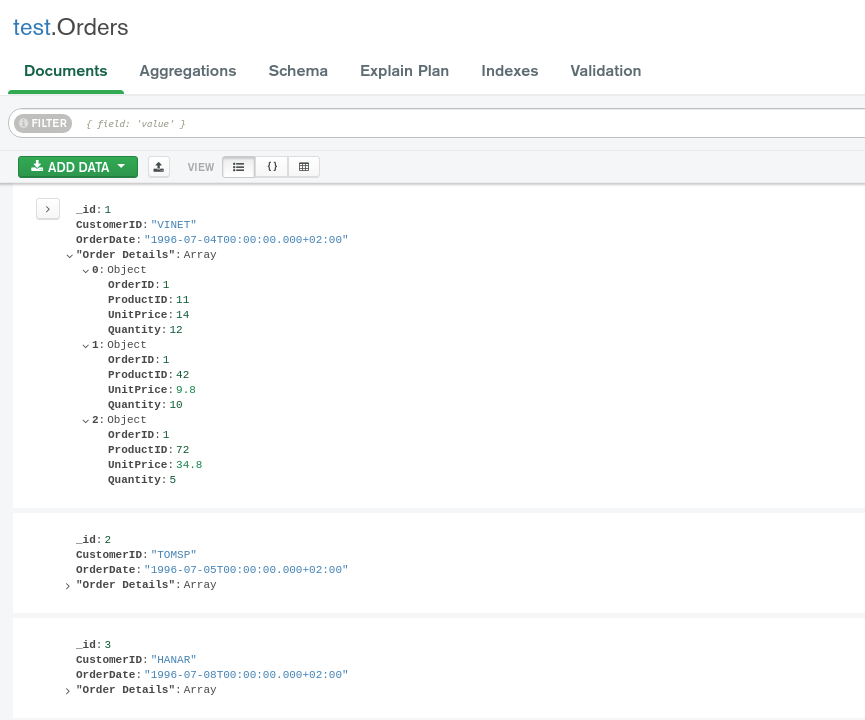
Orders in MongoDB
In MongoDB werden die Positionen innerhalb jedes Dokuments der Collection Orders gespeichert:
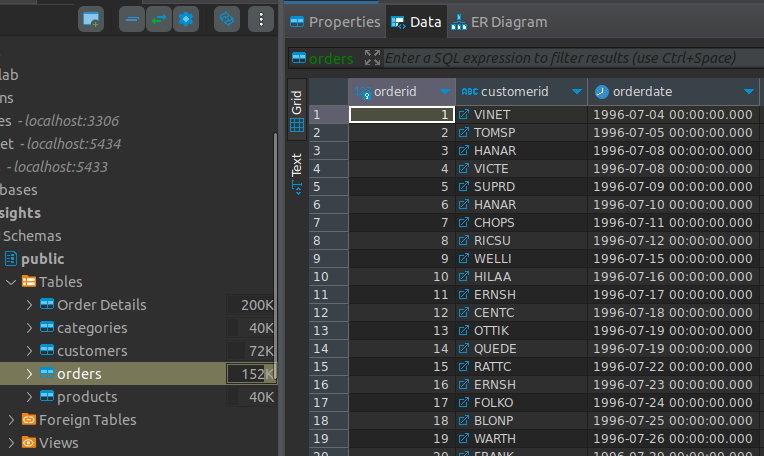
Orders in PostgreSQL
In PostgreSQL werden die Bestellungen in der Tabelle Orders gespeichert:
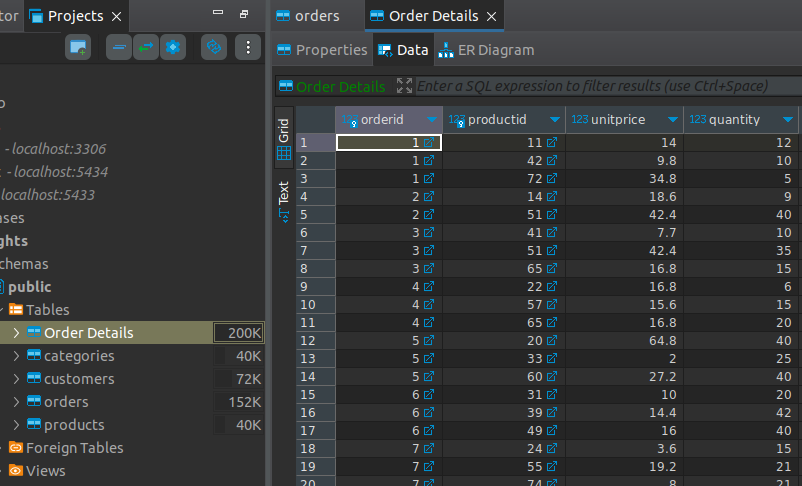
und die Positionen in der Tabelle Order Details:
Abfragen
Dieselbe Abfrage, auf jedem Stage ausgeführt, liefert dieselben Bestellungen mit ihren Positionen (nur das Datumsformat hängt von der Datenbank-Engine ab).
Abfrage auf dem Stage default
lambdaorm execute -e ".env" -s default -q "Orders.filter(p => p.customerId == customerId).include(p => [p.customer.map(p => p.name), p.details.include(p => p.product.include(p => p.category.map(p => p.name)).map(p => p.name)).map(p => [p.quantity, p.unitPrice])]).sort(p=> p.id).page(1,1)" -d "{\"customerId\": \"HANAR\"}"
Ergebnis:
[
  {
    "id": 3,
    "customerId": "HANAR",
    "employeeId": 4,
    "orderDate": "1996-07-08T00:00:00.000+02:00",
    "requiredDate": "1996-08-05",
    "shippedDate": "1996-07-12",
    "shipViaId": 2,
    "freight": 65.83,
    "name": "Hanari Carnes",
    "address": "Rua do Pao, 67",
    "city": "Rio de Janeiro",
    "region": "RJ",
    "postalCode": "05454-876",
    "country": "Brazil",
    "details": [
      {
        "quantity": 10,
        "unitPrice": 7.7,
        "product": {
          "name": "Jack's New England Clam Chowder",
          "category": {
            "name": "Seafood"
          }
        }
      },
      {
        "quantity": 35,
        "unitPrice": 42.4,
        "product": {
          "name": "Manjimup Dried Apples",
          "category": {
            "name": "Produce"
          }
        }
      },
      {
        "quantity": 15,
        "unitPrice": 16.8,
        "product": {
          "name": "Louisiana Fiery Hot Pepper Sauce",
          "category": {
            "name": "Condiments"
          }
        }
      }
    ],
    "customer": {
      "name": "Hanari Carnes"
    }
  }
]
Dieselbe Abfrage auf dem Stage insights
lambdaorm execute -e ".env" -s insights -q "Orders.filter(p => p.customerId == customerId).include(p => [p.customer.map(p => p.name), p.details.include(p => p.product.include(p => p.category.map(p => p.name)).map(p => p.name)).map(p => [p.quantity, p.unitPrice])]).sort(p=> p.id).page(1,1)" -d "{\"customerId\": \"HANAR\"}"
Ergebnis:
[
  {
    "id": 3,
    "customerId": "HANAR",
    "employeeId": 4,
    "orderDate": "1996-07-07T22:00:00.000Z",
    "requiredDate": "1996-08-04T22:00:00.000Z",
    "shippedDate": "1996-07-11T22:00:00.000Z",
    "shipViaId": 2,
    "freight": 65.83,
    "name": "Hanari Carnes",
    "address": "Rua do Pao, 67",
    "city": "Rio de Janeiro",
    "region": "RJ",
    "postalCode": "05454-876",
    "country": "Brazil",
    "customer": {
      "name": "Hanari Carnes"
    },
    "details": [
      {
        "quantity": 10,
        "unitPrice": 7.7,
        "product": {
          "name": "Jack's New England Clam Chowder",
          "category": {
            "name": "Seafood"
          }
        }
      },
      {
        "quantity": 35,
        "unitPrice": 42.4,
        "product": {
          "name": "Manjimup Dried Apples",
          "category": {
            "name": "Produce"
          }
        }
      },
      {
        "quantity": 15,
        "unitPrice": 16.8,
        "product": {
          "name": "Louisiana Fiery Hot Pepper Sauce",
          "category": {
            "name": "Condiments"
          }
        }
      }
    ]
  }
]